OpenAI Platform
APIs, models, tools, and developer resources for building AI-powered products and workflows.
Visit OpenAI Platform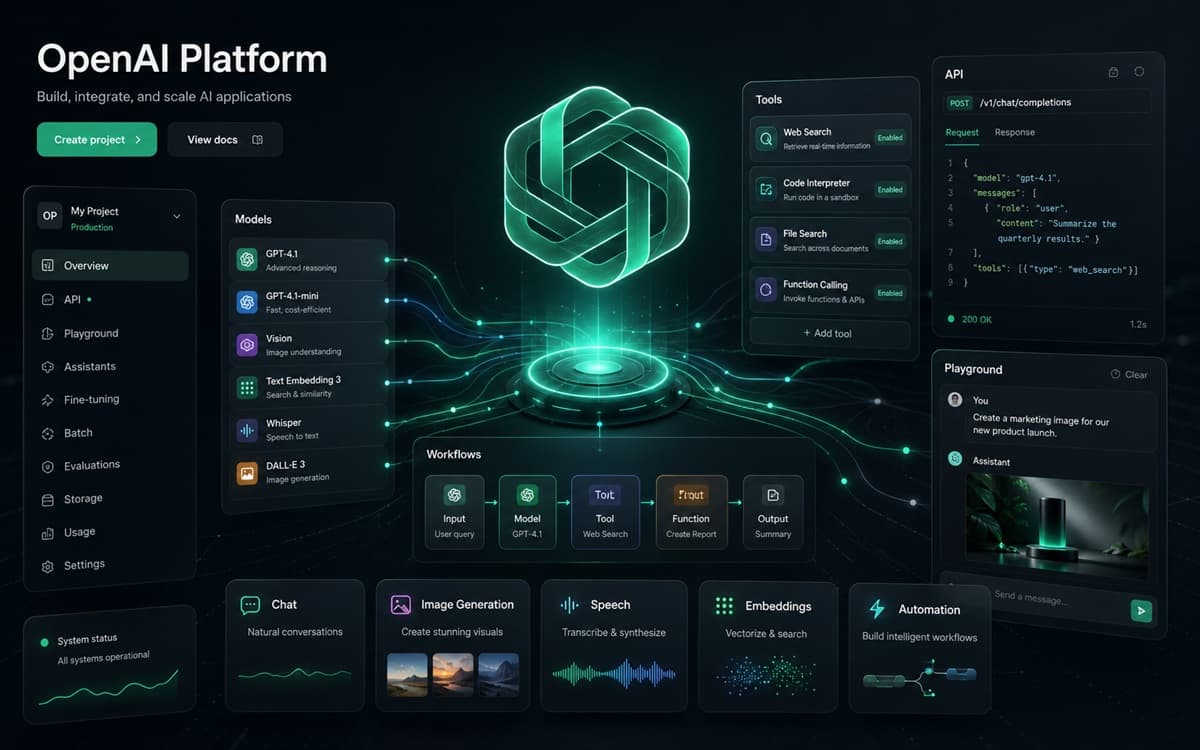
What the OpenAI Platform offers
The OpenAI Platform is the developer environment for building software with OpenAI models. It brings together API access, official documentation, model and tool guides, client libraries, account and project controls, usage information, and interactive ways to test an idea before placing it inside an application.
OpenAI’s current API documentation presents the Responses API as the primary interface for direct model requests and tool-using interactions. It supports text and image inputs, text output, conversation state, function calling, and built-in tools such as web search and file search where supported. The wider platform also documents low-latency voice and audio experiences through the Realtime API and organization workflows for projects, credentials, users, and administration. Features and supported models evolve, so developers should use the official documentation rather than relying on an old tutorial or hard-coded assumption.
Who may enjoy it
This showcase is for people ready to move from using an AI product to building one. Software developers can integrate model capabilities into websites, internal tools, mobile apps, and automated workflows. Product teams can prototype an experience and learn what the model needs from the surrounding interface. Technical learners can make a first API request and see how prompts, inputs, outputs, tools, and application code fit together.
The platform is also valuable for non-developer collaborators. Designers, managers, educators, and domain experts can use the documentation to understand what an implementation team is controlling—and which product decisions still belong to people.
How it connects to the AI revolution
The OpenAI Platform shows the infrastructure side of the AI revolution. A conversational model becomes part of a useful product only when developers add goals, data boundaries, tool permissions, validation, user experience, monitoring, and fallback behavior. The API makes powerful capabilities available; the application around it determines how those capabilities meet a real need.
That connection makes the platform a natural next step after the Atlas guides on automation thinking, ethics and safety, and what AI can and cannot do. It is where those principles become design and engineering choices.
A good first visit
Start with the official quickstart and make one small request using non-sensitive test information. Then inspect each part: the model selected through configuration, the instructions, the input, the returned output, error handling, and the human review step your product would need. Keep the first project narrow enough that you can recognize a good result and detect a bad one.
Never expose an API key in client-side code or commit it to a repository. Before production, review current guidance for security, rate limits, errors, request logging, evaluation, data handling, and costs.
Official starting points
- Open the OpenAI Platform
- Read the API overview
- Follow the developer quickstart
- Explore the Responses API
Last reviewed June 20, 2026.
Evaluate thoughtfully
Is this tool a fit for your goals?
 Ask Dr. Mira