Hugging Face
A collaborative hub for discovering, sharing, and building with machine-learning models, datasets, and apps.
Visit Hugging Face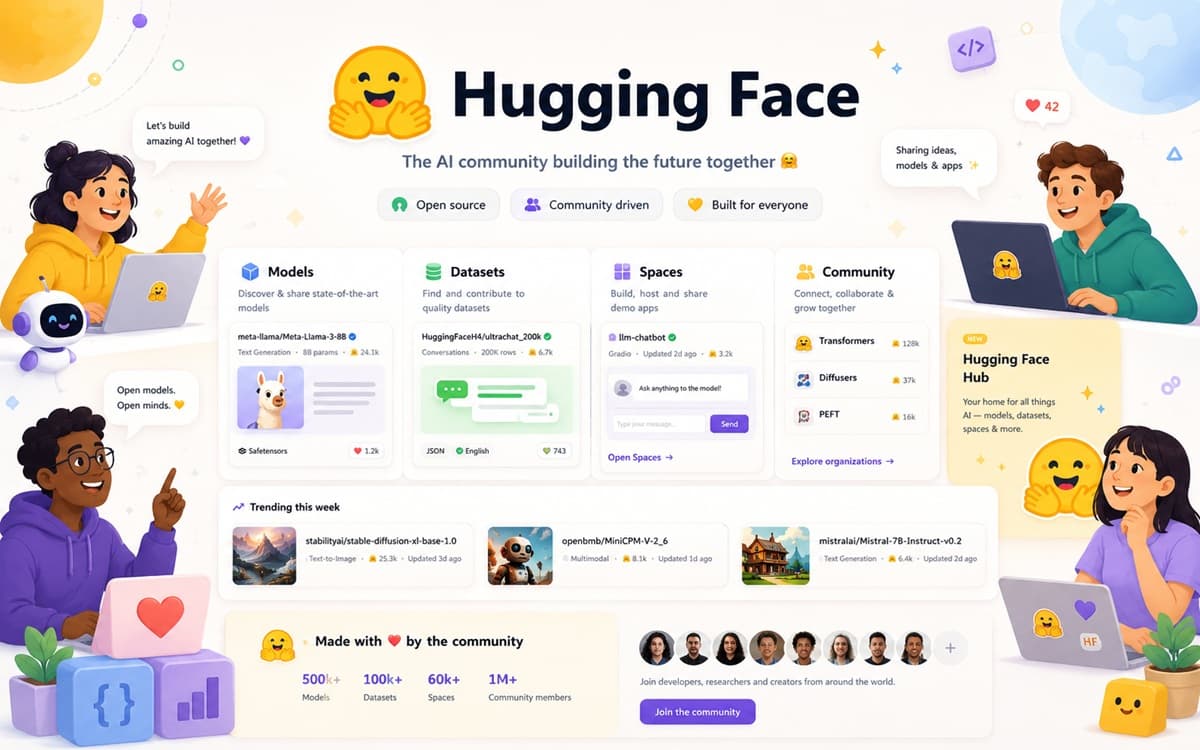
What Hugging Face offers
Hugging Face is a collaborative platform and open-source ecosystem for machine learning. Its Hub brings together models, datasets, and Spaces—interactive applications that let people demonstrate and explore AI projects. Around the Hub, Hugging Face maintains libraries and services that help developers train, evaluate, share, and use machine-learning systems.
A model page can include documentation, files, licensing information, usage examples, and a model card describing intended uses or limitations. Dataset pages can provide similar context about data. Spaces turn code and models into experiences people can try in a browser. The result feels part software repository, part learning library, and part public workshop for the AI community.
Who may enjoy it
Developers and researchers can discover reusable building blocks, compare approaches, and publish their own work. Students can see how AI projects are documented and explore examples beyond a single commercial assistant. Educators can find demonstrations that make abstract machine-learning ideas tangible. Curious nontechnical visitors can browse Spaces to see the remarkable range of experiments people are creating.
The platform rewards exploration, but it does not require every visitor to begin by writing code. Reading a model card, comparing two project pages, or trying a public demonstration can reveal a great deal about how AI systems differ.
How it connects to the AI revolution
Hugging Face makes the participatory infrastructure of the AI revolution visible. AI is not produced only by a few finished consumer products. It also grows through shared models, datasets, open-source libraries, documentation, community discussion, demos, and the ability to build on earlier work.
For Atlas readers, the Hub offers a bridge between AI literacy and hands-on technical exploration. It also makes ethics and safety concrete: licenses, data provenance, model documentation, intended uses, and deployment choices are part of understanding whether a resource fits a project.
A good first visit
Open the Spaces directory and choose a public demonstration connected to an interest you already have. Before trying it, open the linked project or model page. Look for the creator, task description, license, model or dataset card, and notes about intended use. Then try a non-sensitive example and compare the result with the documentation.
Public community resources vary widely in maintenance, quality, licensing, and safety. Treat each repository or Space as its own project, review its documentation, and avoid sharing confidential data with an unfamiliar demo.
Official starting points
Last reviewed June 20, 2026.
Evaluate thoughtfully
Is this tool a fit for your goals?
 Ask Dr. Mira