DatabaseMeter
Database portfolio monitoring that keeps provider metrics and PostgreSQL workload evidence in context.
Visit DatabaseMeter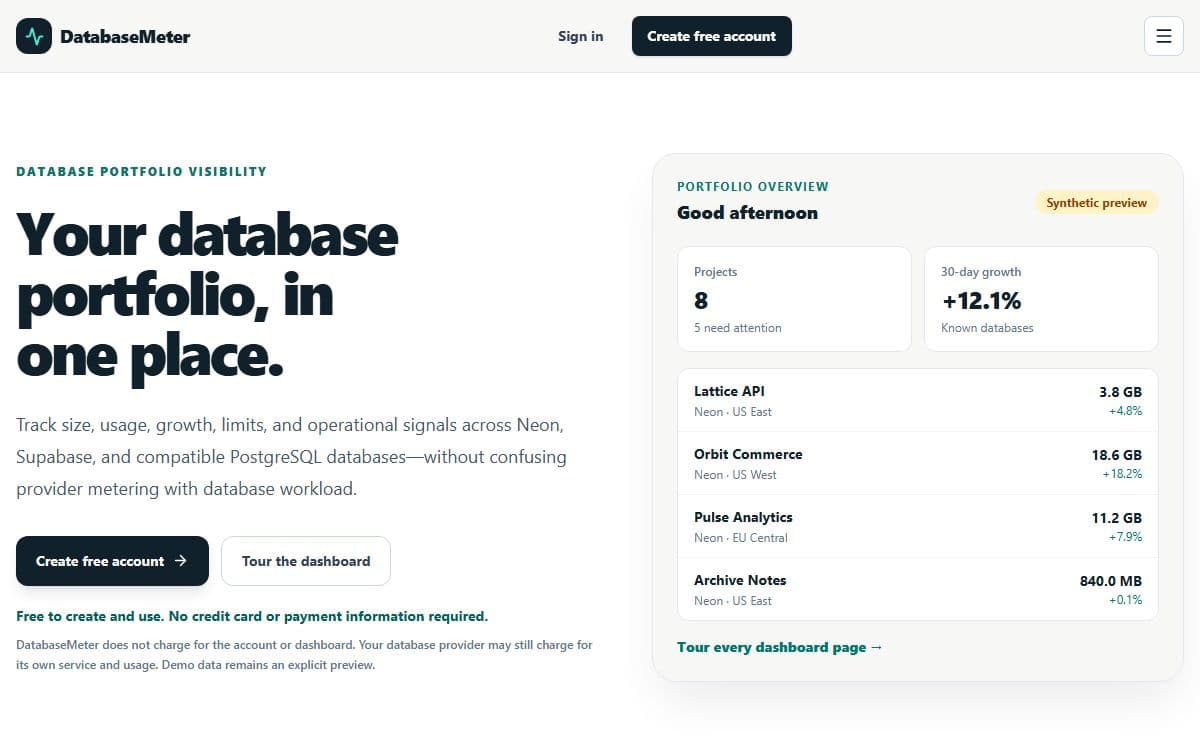
What DatabaseMeter does
DatabaseMeter gives developers a portfolio view of databases running on Neon, Supabase, and compatible PostgreSQL systems. Its public pages describe monitoring for database size, growth, usage, workload, alerts, and operational changes. The dashboard is designed to help a developer see which projects may need attention and investigate how conditions have changed over time.
A central idea is evidence separation. Provider measurements and PostgreSQL workload statistics answer different questions, so DatabaseMeter keeps their meaning visible instead of blending them into one ambiguous number. Neon or Supabase projects retain the metrics reported by those providers, while direct PostgreSQL monitoring contributes compatible database and workload telemetry without implying access to provider billing or plan data.
Who it may help
DatabaseMeter may be useful for developers, technical founders, and small engineering teams responsible for several databases. It provides a place to review portfolio-level signals before moving into the details of one project. This can be practical when databases span providers, when storage growth is easy to overlook, or when a team needs a clearer record of operational changes.
The product is also relevant to developers learning database operations. Its public dashboard tour and tools make concepts such as database growth, connections, relation size, workload counters, and provider usage easier to examine in context. Monitoring does not replace diagnosis, but organized evidence can help a developer decide what to investigate next.
How it connects to the AI revolution
AI products still depend on ordinary infrastructure: applications, databases, provider services, scheduled jobs, and the operational discipline that keeps them reliable. DatabaseMeter represents that developer-infrastructure layer of the AI Sure Tech portfolio. It focuses on the systems beneath a product rather than making unsupported promises about what AI can infer or automate.
That distinction is useful for AI literacy. An application may use AI, but its team still needs trustworthy measurements, explicit data boundaries, and human review of operational evidence. Keeping provider metrics separate from database workload evidence is one example of a broader engineering habit: preserve what each signal actually means before drawing a conclusion from it.
A practical next step
Begin with the public dashboard tour to see how portfolio, project, usage, workload, alert, and change views are organized. Then explore the free tools for a low-risk introduction to PostgreSQL health checks, workload counters, provider units, and database growth calculations.
Before connecting any database or provider account, review DatabaseMeter's current security documentation and the permissions it requests. Use dedicated, least-privilege credentials where the documentation calls for them, confirm the source and scope of each metric, and treat alerts or projections as prompts for investigation rather than conclusions on their own.
Official starting points
Last reviewed August 31, 2026.
Evaluate thoughtfully
Is this tool a fit for your goals?
 Ask Dr. Mira